

Ankle Sprains and Strains
Ankles are one of the most commonly injured joints not just in sport but also in every day live too. In this blog I will focus on the anatomy of the ankle, how ankle injuries are caused alongside treatment, advice, rehabilitation and favourite exercises.
Anatomy
The ankle or Talocrural joint is a synovial hinge joint formed by the tibia, fibula and the talus. Being a hinge joint means the ankle provides plantar and dorsi-flexion of the foot. The Subtalar joint sits just below the Talocural joint and is formed by the articulation of the Talus and the Calcaneus, this plane synovial joint provides inversion and eversion at the ankle.
Within the ankle there are two sets of ligament groups, one set supporting each side of the ankle, the medial set of ligaments are also known as the Deltoid ligaments. These are 4 bands of separate ligaments that resist over eversion of the ankle and originate from the medial malleolus to the talus, calcaneus and navicular bones. The lateral ligaments are formed on the other side of the ankle and span from the lateral malleolus resisting over inversion of the ankle. Three ligaments make up the lateral ligaments of the ankle, Anterior Talofibula Ligament (ATFL), Posterior Talofibula Ligament (PTFL) and Calcaneofibula ligament (CFL).
Both the Talocrural and Subtalar joints work together to perform all movements around the ankle, as mentioned the Talocrural joint provides plantar and dorsi-flexion at the ankle. Plantar flexion is performed by the gastrocnemius, soleus, plantaris and tibialis posterior and are all innervated by the tibial nerve. Whereas dorsi-flexion is initiated by the tibialis anterior, extensor hallucis longus and extensor digitorum longus and are all innervated by the deep fibular nerve. Inversion and Eversion the other two movements at the ankle are performed at the Subtalar joint, inversion is produced by the flexor hallucis longus, flexor digitorum longus, tibialis posterior and tibialis anterior and eversion is performed by the fibularis tetris, fibularis longus and fibuaris brevis.
The muscles around the ankle move the foot and stabilise the ankle to avoid over-stretching the ligaments, if the muscles don’t act fast enough or loose control the ligaments are put under stress or stretch consequently causing a strain.
Ankle Sprain
Ankle sprains are the most common injury associated with the ankle and normally strain the lateral ligaments. They are commonly caused by rolling the ankle inwards, which consequently causes pain, bruising and for the ankle to swell almost instantaneously. This is due to the ankle having to support the whole body weight in an already vulnerable position, this can occur from a fall or even walking on uneven surfaces. This injury can be graded from Grades 1-3 depending on the type of strain/tear on the ligaments, this also means recovery time will vary depending on the grade. It is important to follow a step-by-step treatment protocol followed by a rehabilitation program to help reduce risk of re-injury, however if symptoms still persist after 6-8 weeks then referral for further investigation may be needed.
Ankle Fracture
Ankle fractures occur when one or more of the bones break, these can be caused from external force/contact onto the ankle or extreme movement of the ankle. If an ankle fracture is suspected it is important to go to A&E to get an X-ray to diagnose a fracture/bone fractured and gain relevant treatment to immobilise the ankle.
Immediate Treatment Protocol
Following an ankle injury the POLICE protocol should be incorporated immediately, which consists of:
- Protection
- Protect the ankle from further injury
- Optimal Loading
- Don’t completely rest the ankle try to weight bare when possible
- Ice
- Use ice for 30 minutes 3 times a day to reduce any swelling or bruising from the ankle
- Compression
- Compressing the ankle whilst using ice will help in the reduction of swelling
- Elevation
- Alongside ice and compression making sure the ankle is above heart level will help reduce any swelling or bruising
After the first 1-2 weeks of the POLICE protocol electrotherapy injury treatment such as ultrasound and interferential therapy can be used to speed up the healing process, reduce pain, swelling and breakdown scar tissue.
Once swelling, bruising and pain has diminished and sufficient range of movement is restored a rehabilitation program should be followed to reduce stiffness and pain and increase balance, coordination and strength. An ankle sprain healing process can last from 4-6 weeks; a patient should be able to go through full ranges of movement with no pain, able to weight bare during walking, jogging and sprinting along with being able to do everyday activities with no symptoms of pain or discomfort. Braces and supports can be purchased and worn for ankle sprains, these can be worn during the day or whilst playing sport, reduce risk of injury and make a patient feel much more comfortable and confident with their injury.
Rehabilitation Exercises
The core types of exercises surrounding ankle rehabilitation involve:
- Proprioception
- Balance and Coordination
- Strength
- Isometric and Isotonic (concentric, eccentric) work
- Range of movement
- Full or Partial Range activities
- Plyometrics
- Incorporating speed, power and agility
- Aerobic Exercise
- Sport Specific Training
- Specific exercises tailored to a patients sport/activities
Favourite Exercises
Proprioception
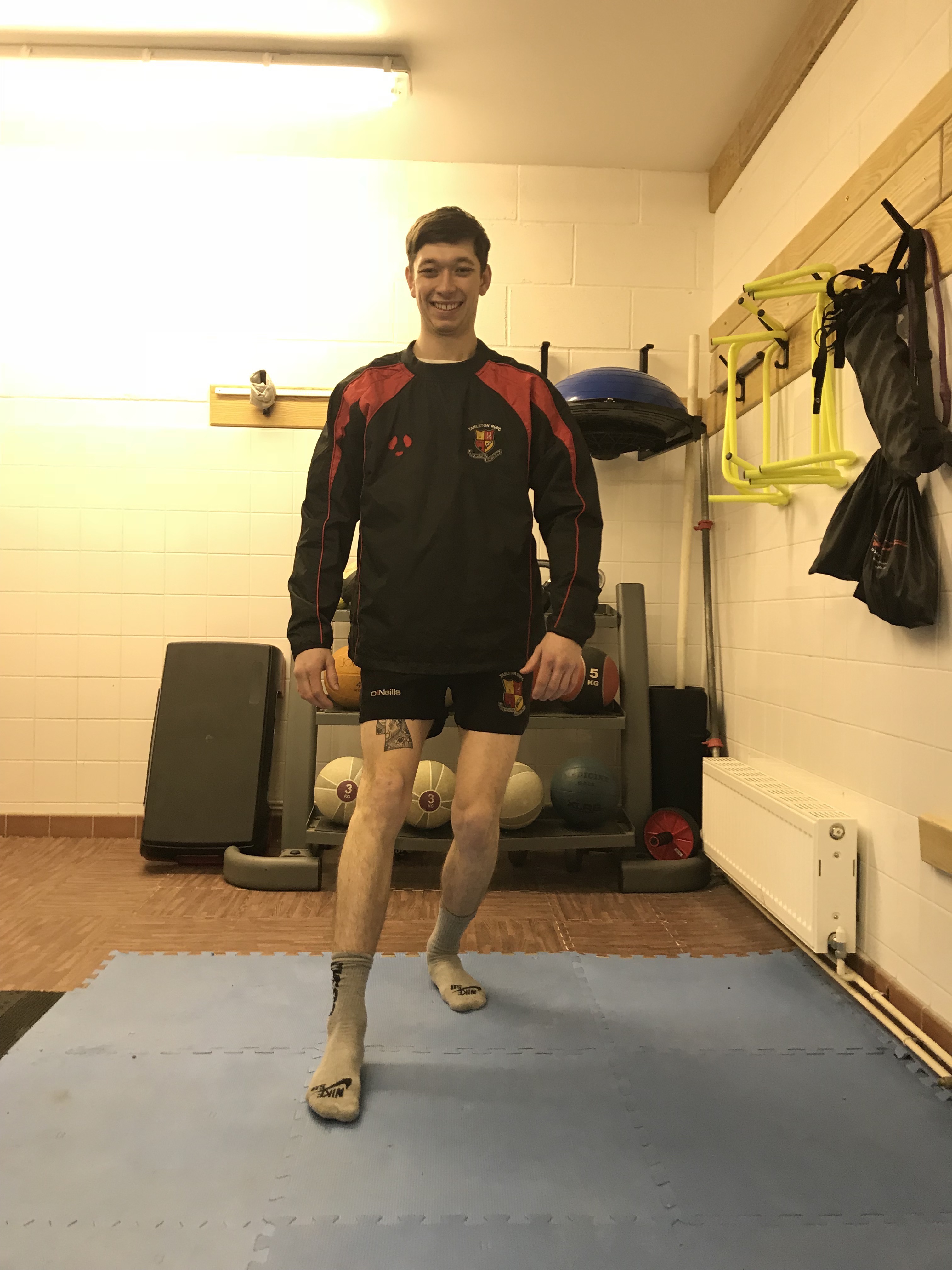
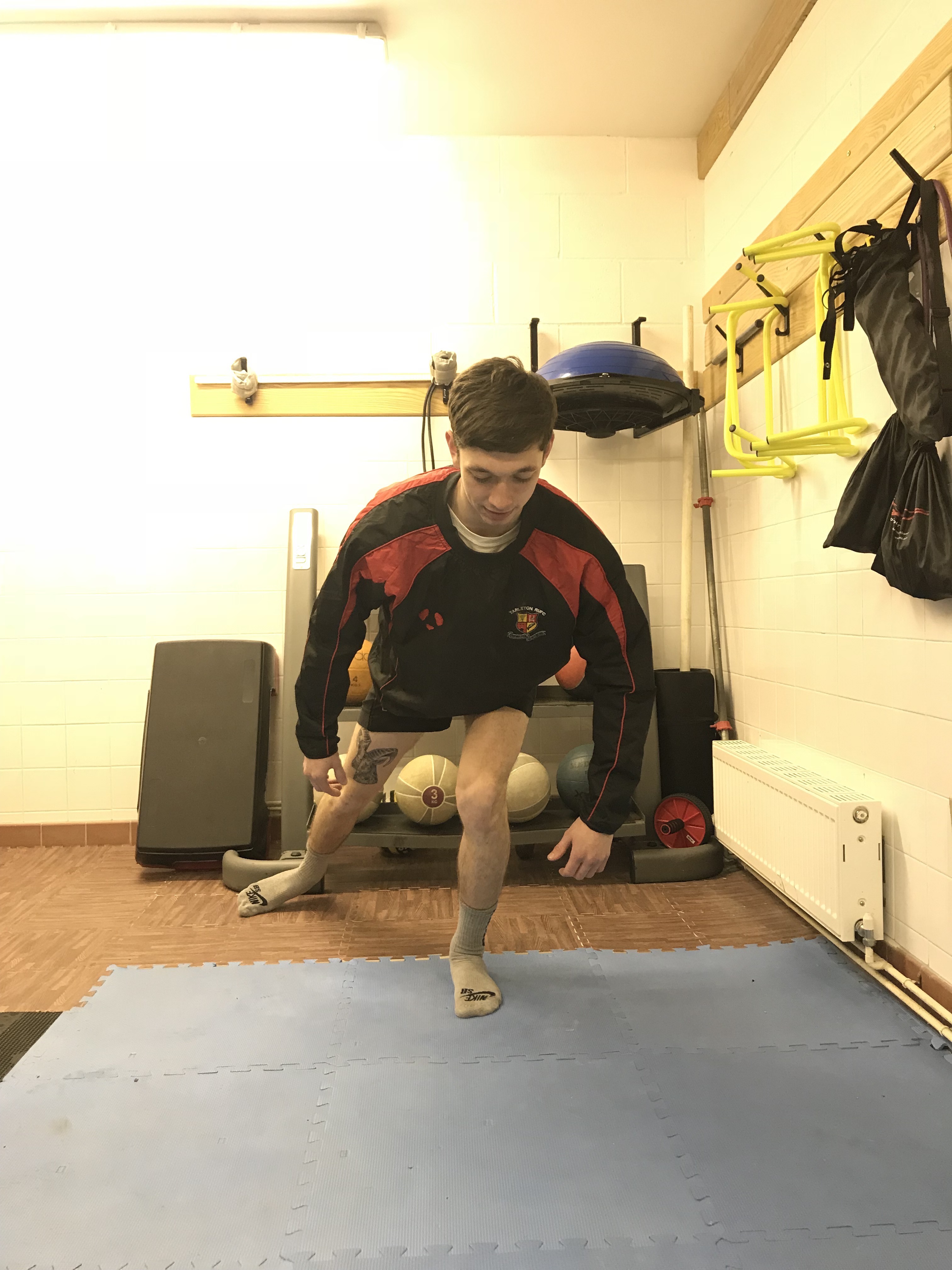
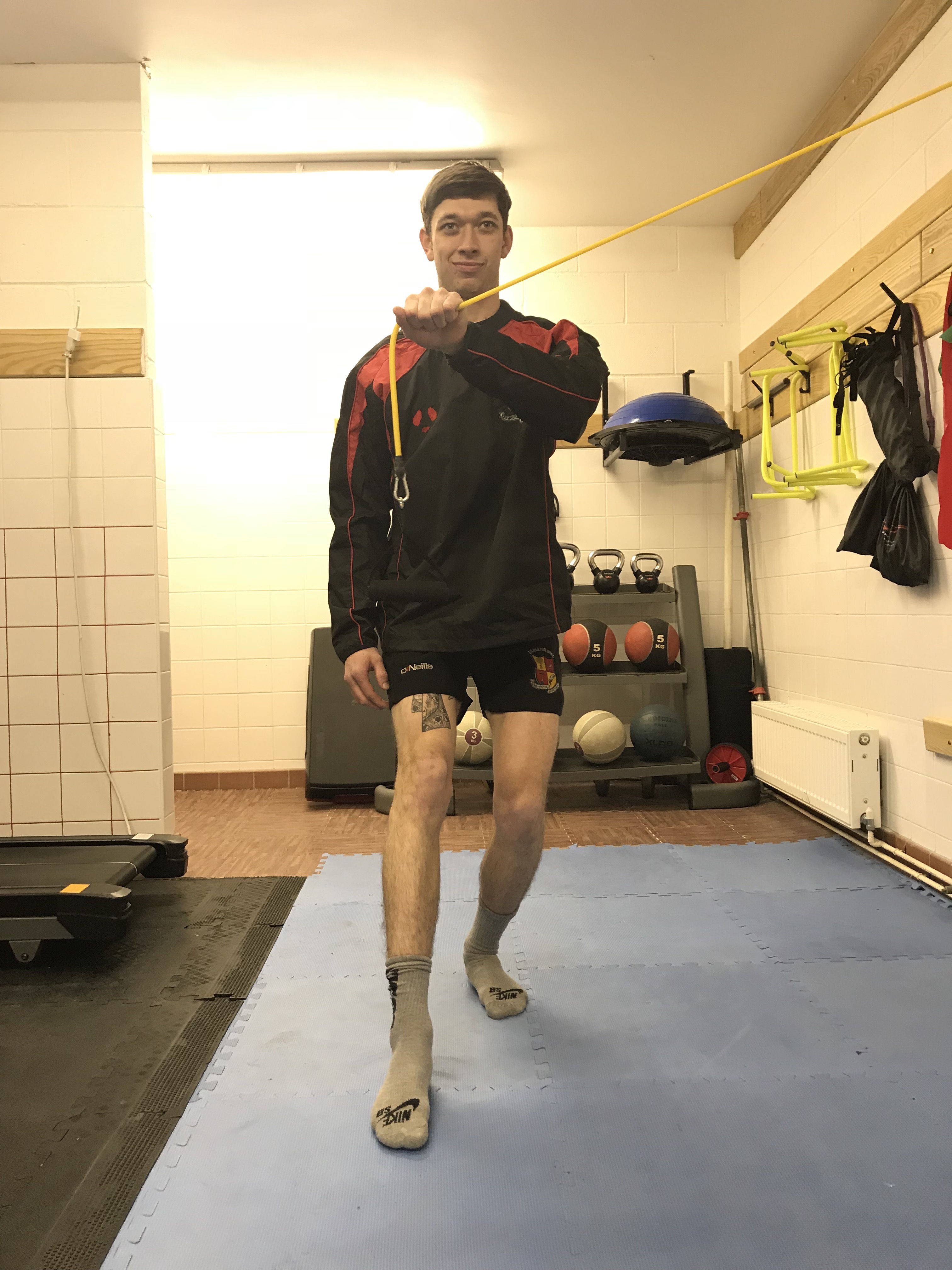
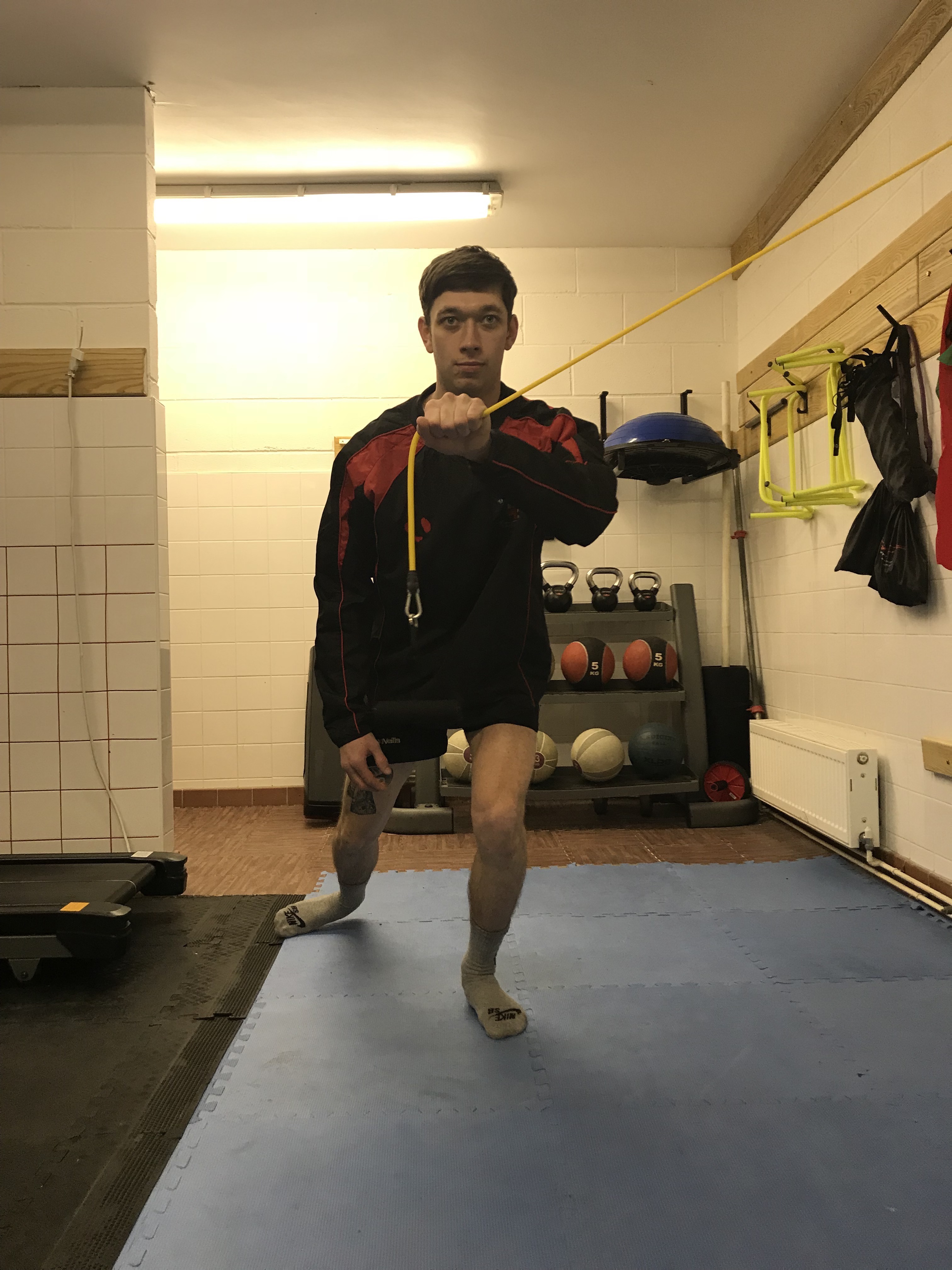
My go to exercise when starting a rehabilitation plan for an ankle injury is proprioception; the clockwork protocol works best for improving ankle balance and coordination in different positions. Once an athlete is sufficient at this a thera-band can be added to add extra resistance to the movement to put much more work around the ankle to keep balanced. In the later stages of rehab different surfaces can be used to further test a patient’s balance, my favourite piece of equipment is the Bosu ball. Training the coordination and proprioceptive structures around the ankle really helps to reduce risk of re-injury.
Strength
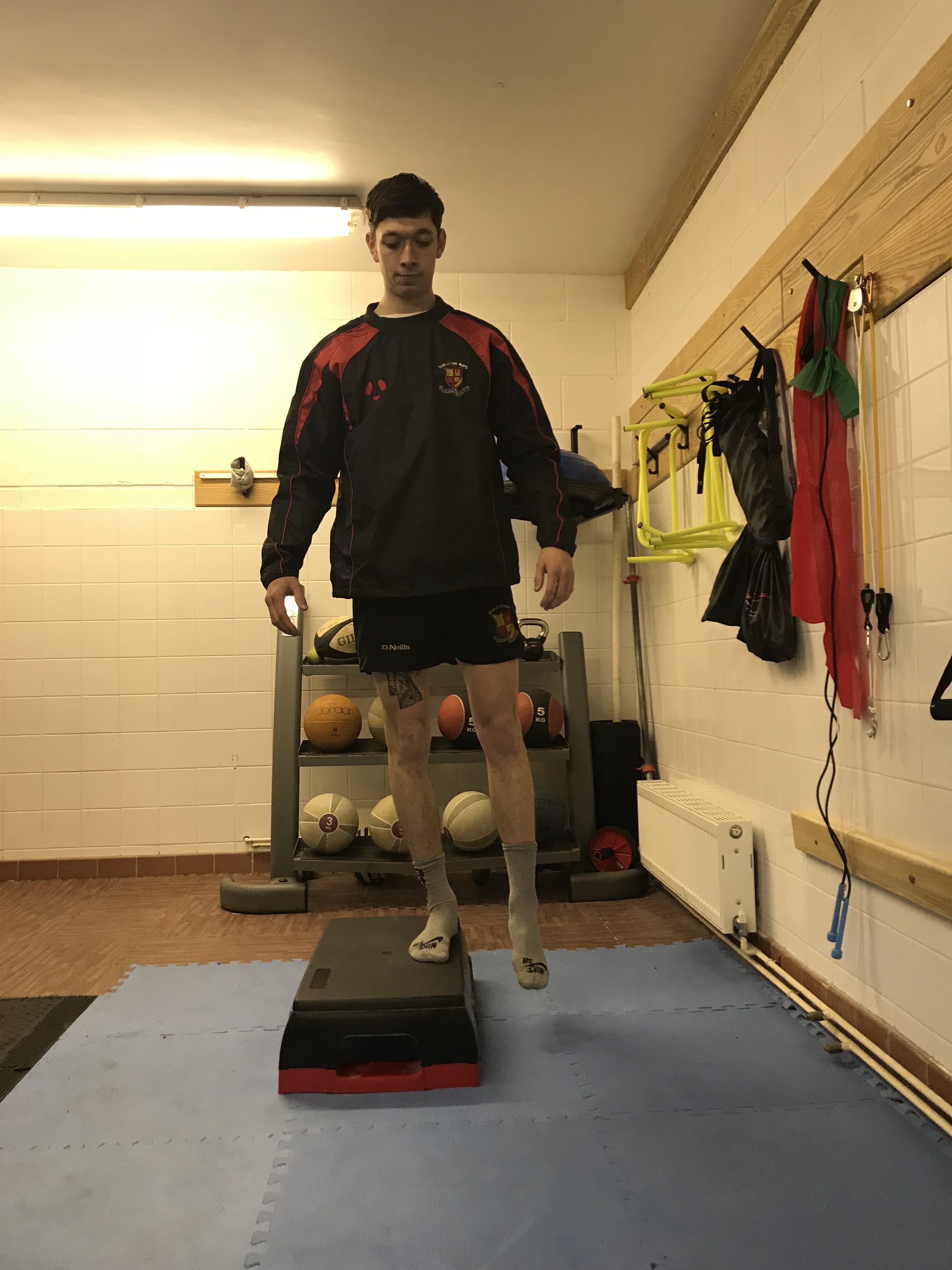
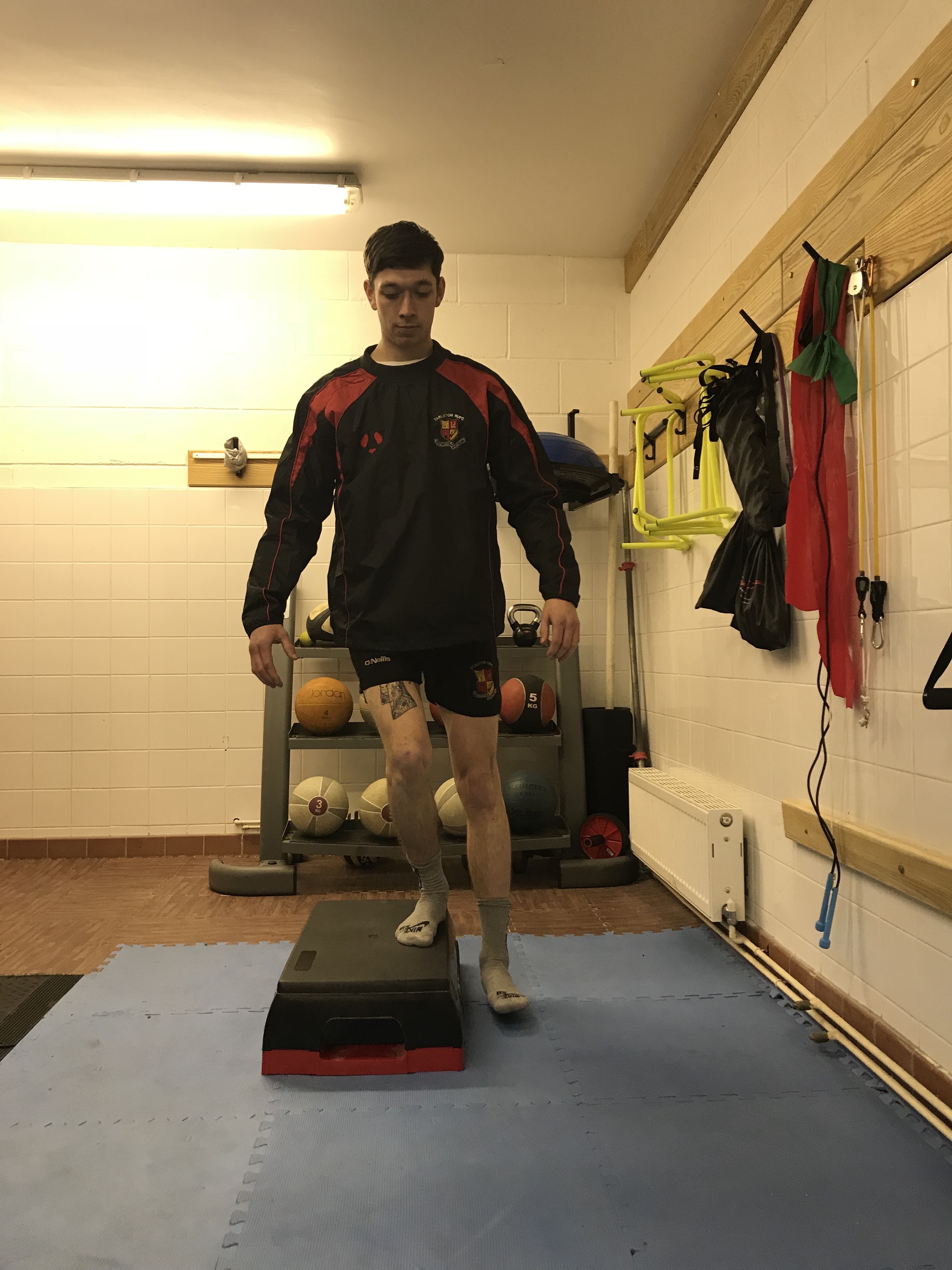
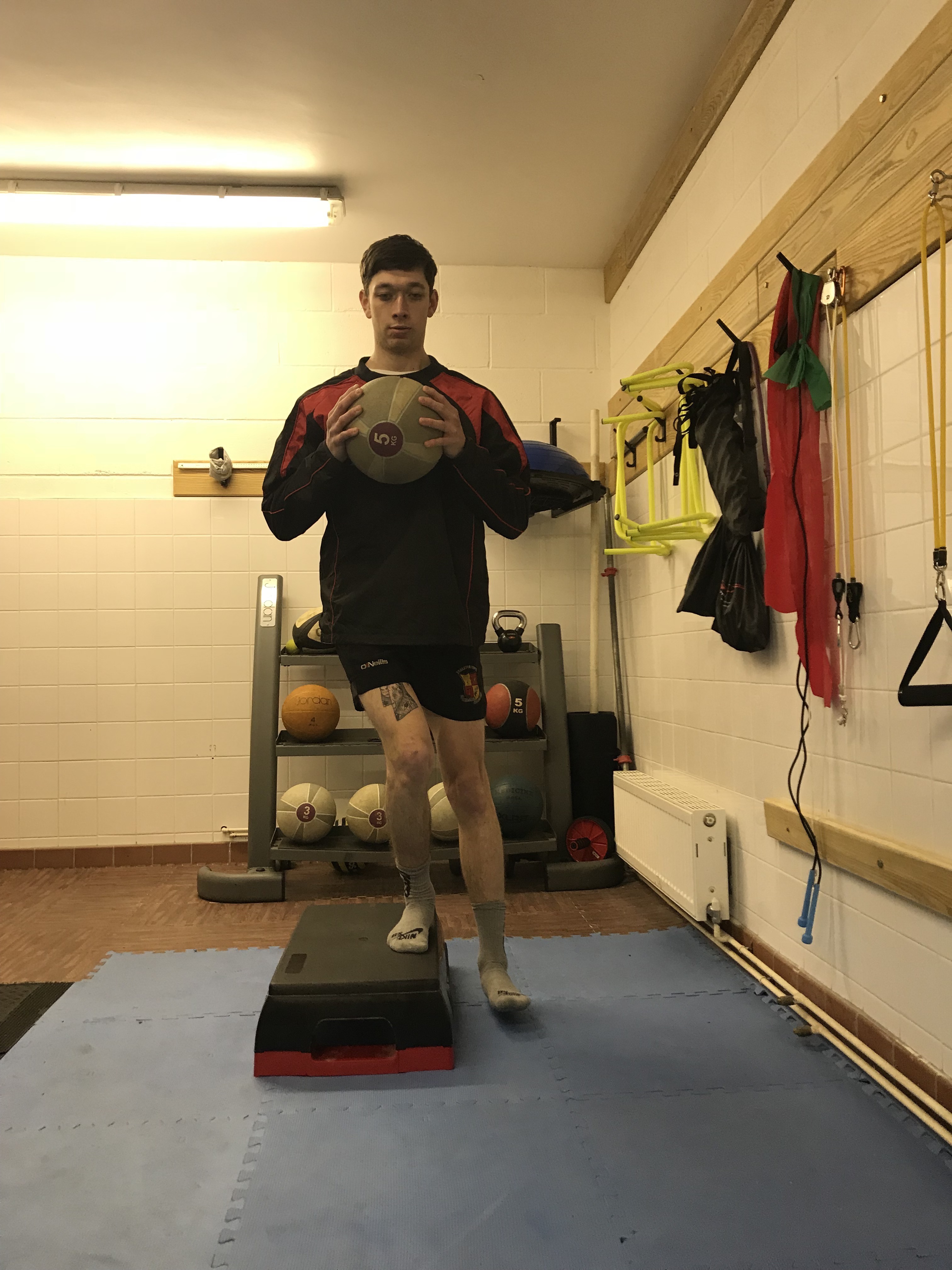
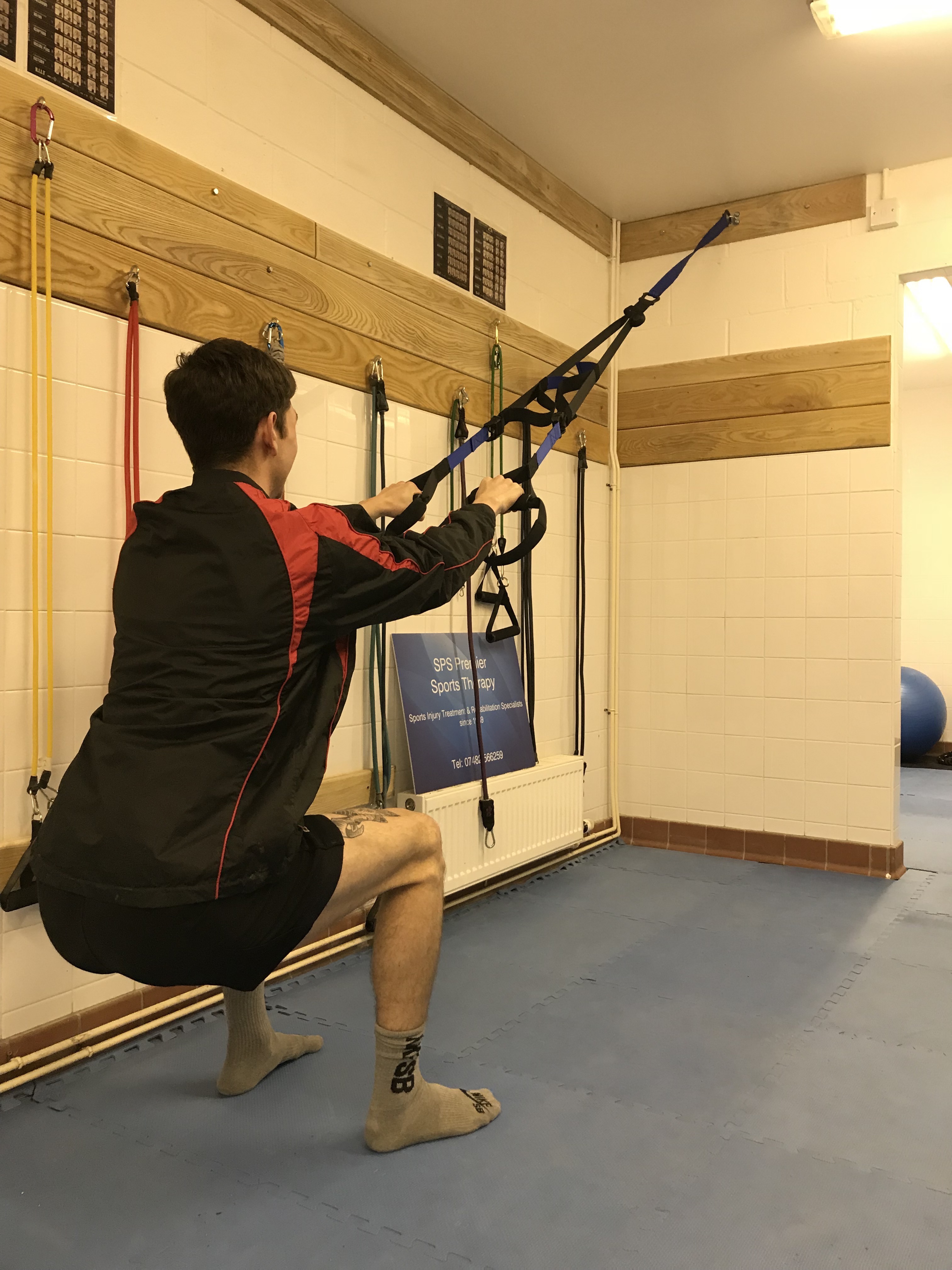
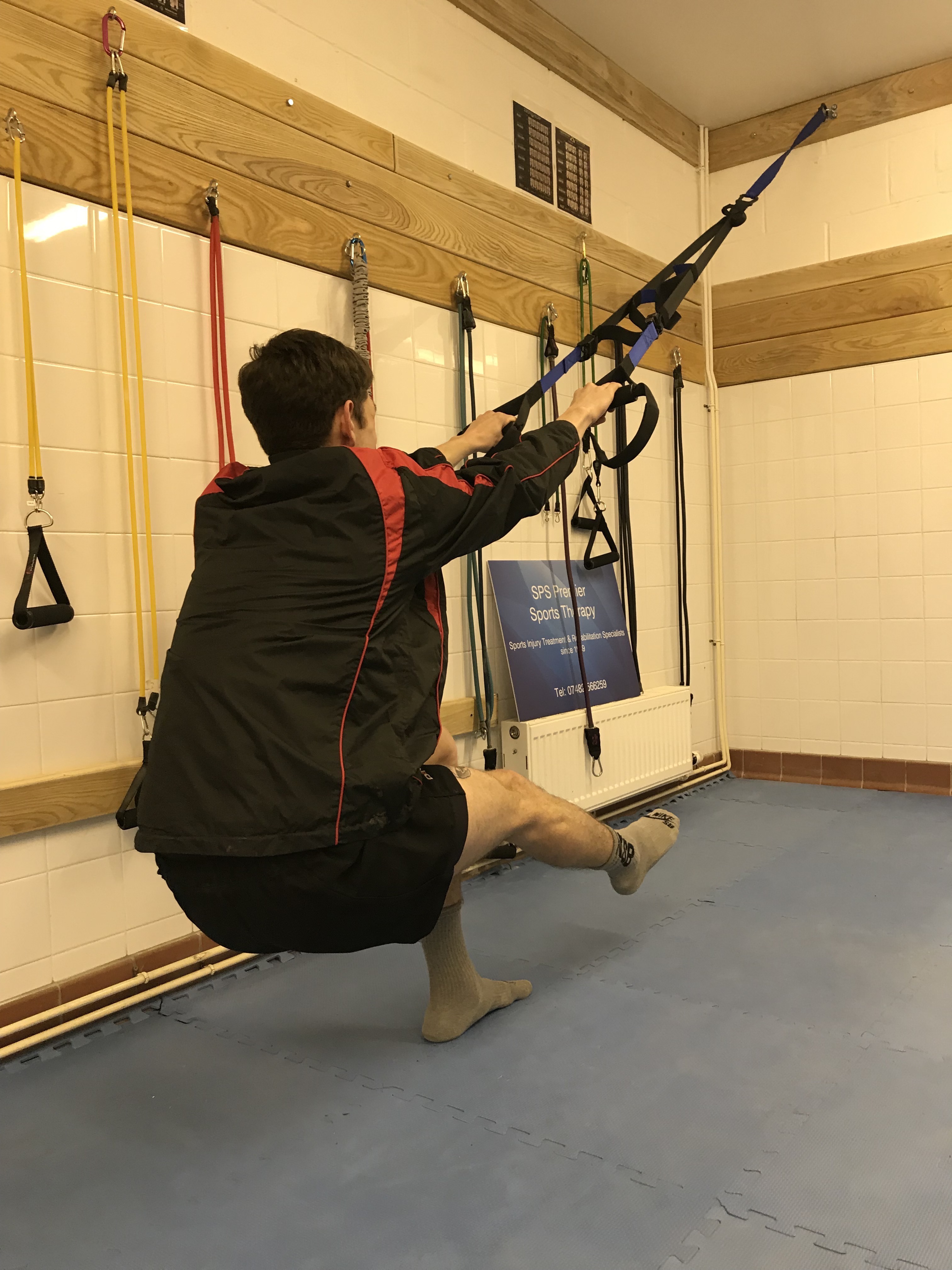
There are lots of different types of strength activities that can be done to strengthen the muscles surrounding the ankle, in the early stages of rehabilitation my favourite exercise is the eccentric post tib, which works the quadriceps but also works on the muscles surrounding the ankle. When a patient becomes fluent in this movement at body weight resistance can be added. When a patient has progressed into the later stages of rehab TRX double/single leg squats are great exercises to increase strength but are also useful in gradually increasing body weight to both movements. The single leg squat takes much practice and coaching to be done efficiently so for some patients may be inappropriate to incorporate into their rehab plans but once mastered it is a great exercise to test and strengthen all structures in the lower limb.
Range of Movement
These exercises can be done as soon as an ankle sprain is diagnosed taking the foot through gentle ranges of movement without pain will keep the muscles and surrounding structures around the ankle active and refrain them from stiffening up.
Plyometrics
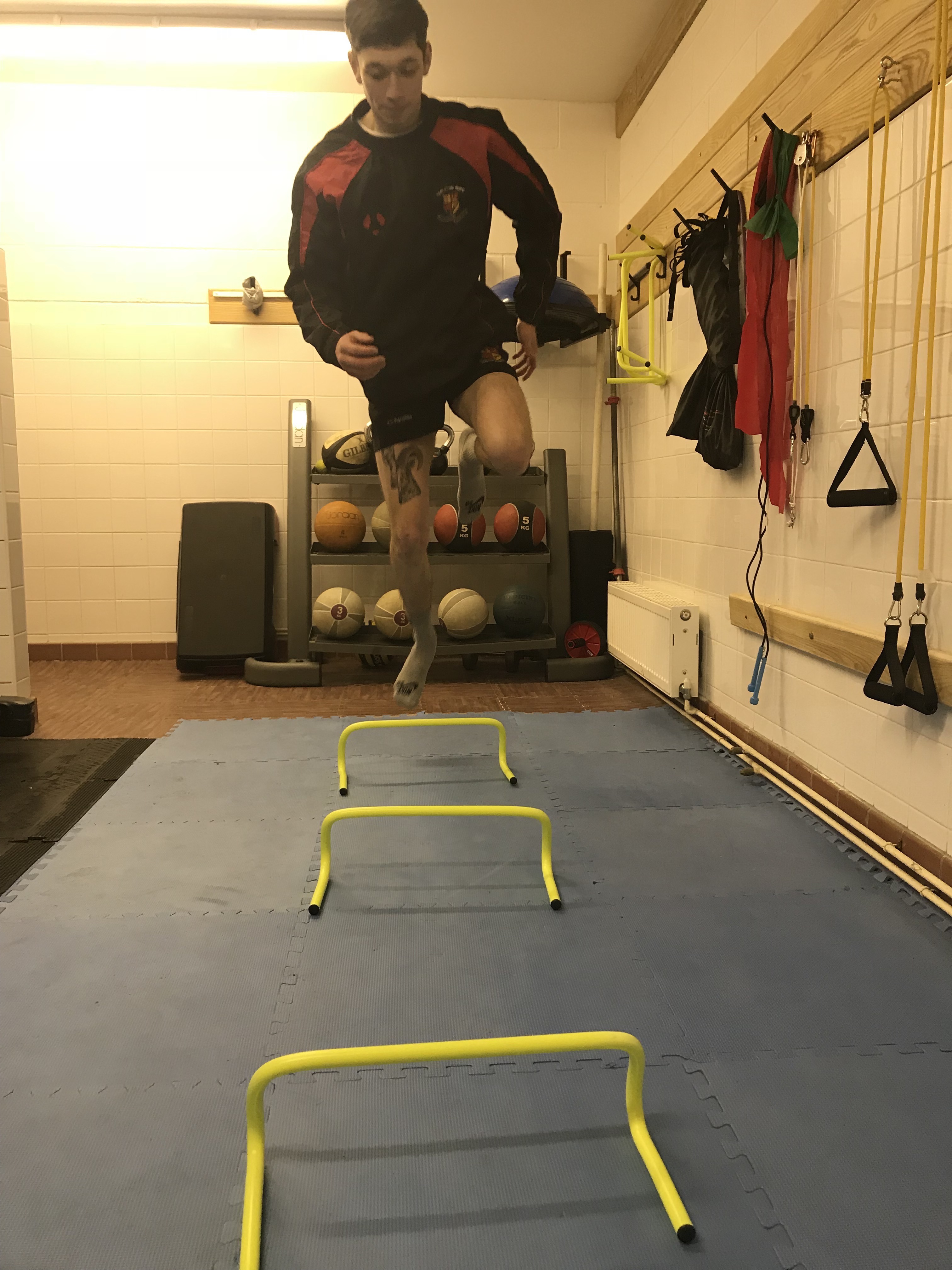
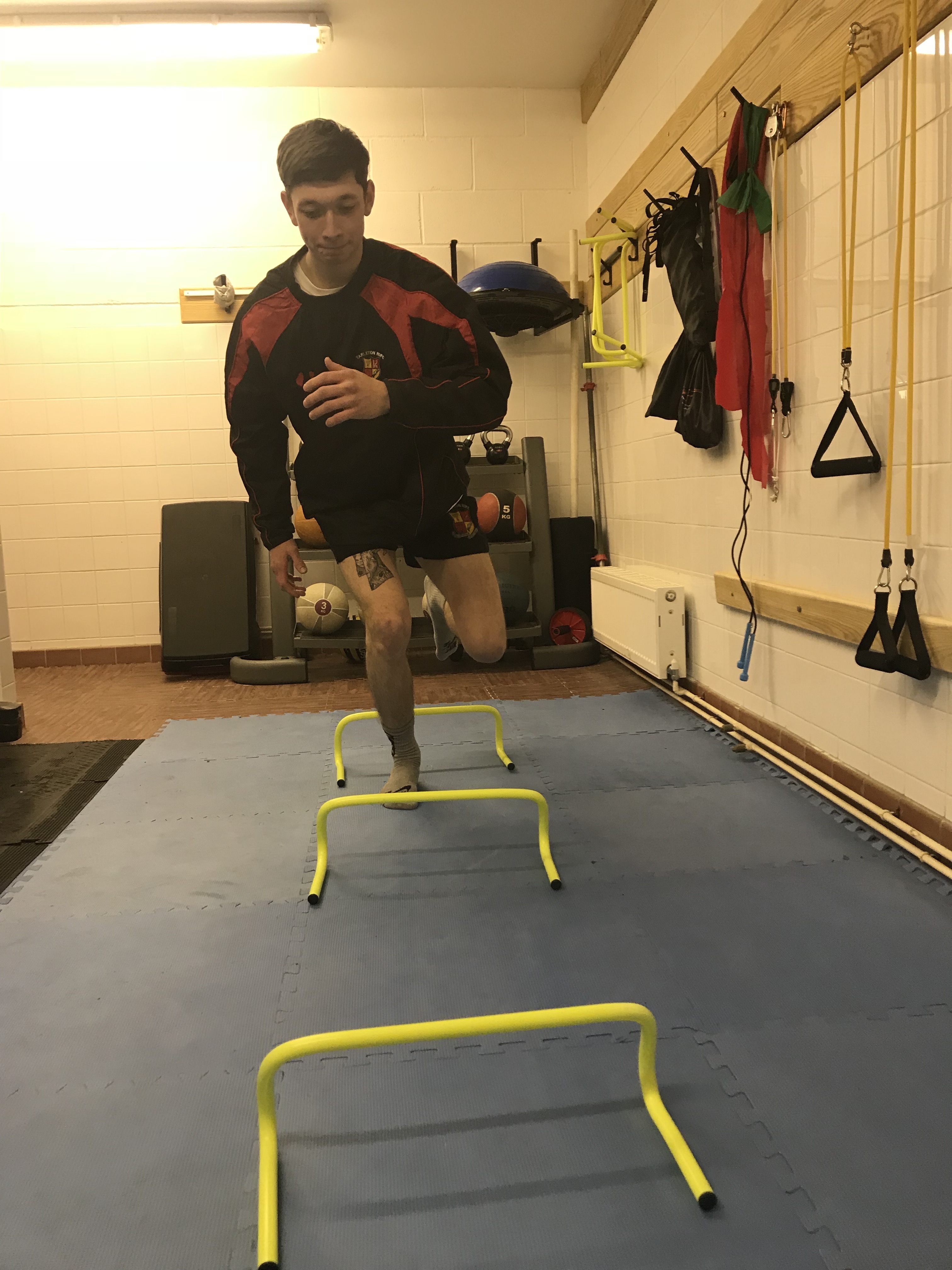
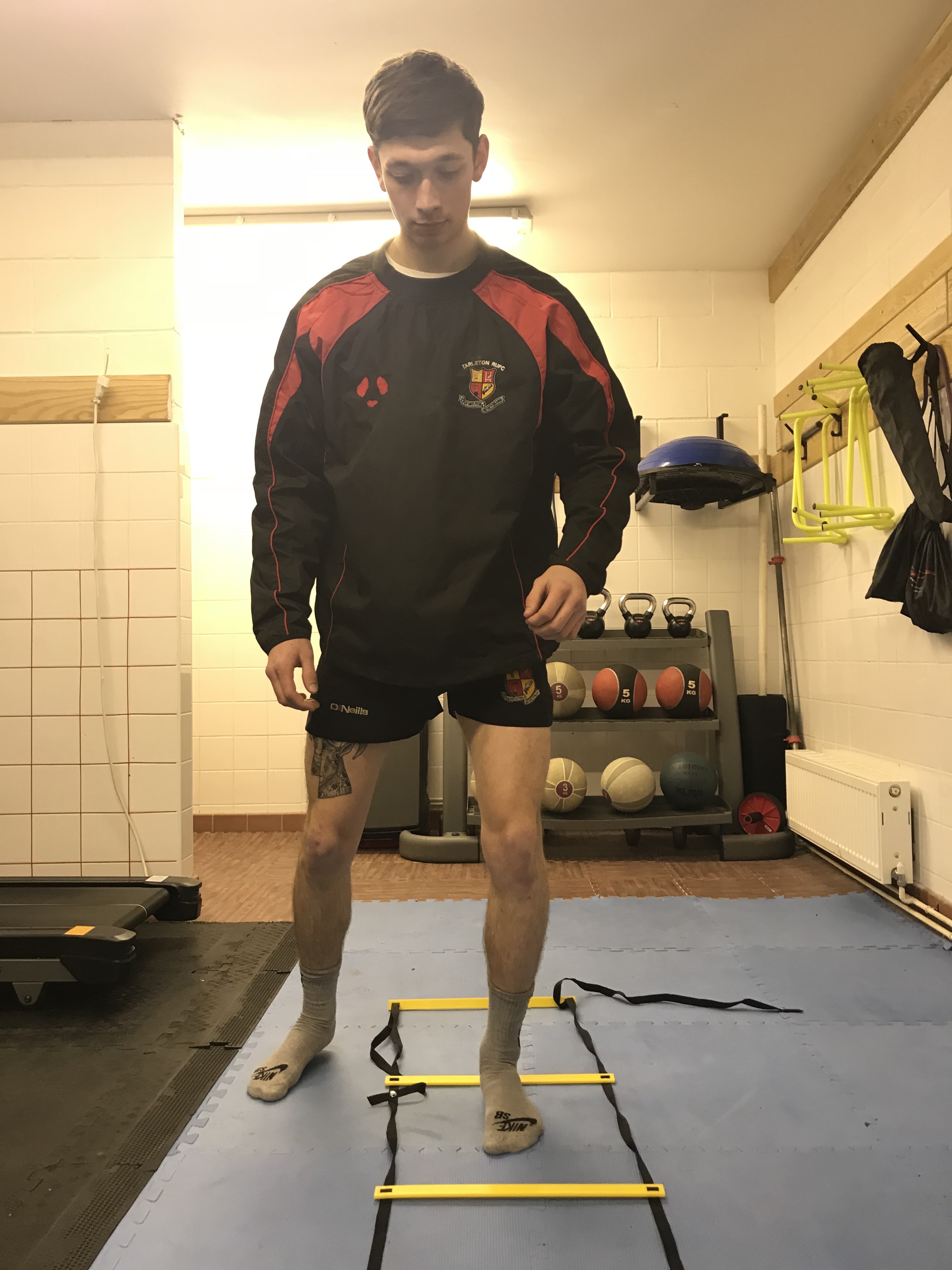
Plyometrics should be done when a patient has sufficient strength, power and range of motion around the ankle. Plyometrics involve fast movements that get a patient ready to get back into their sport or exercise again. My favourite pieces of equipment are hurdles and ladders, both are perfect for improving a patient’s speed and change of direction.
Sport
Specific Training
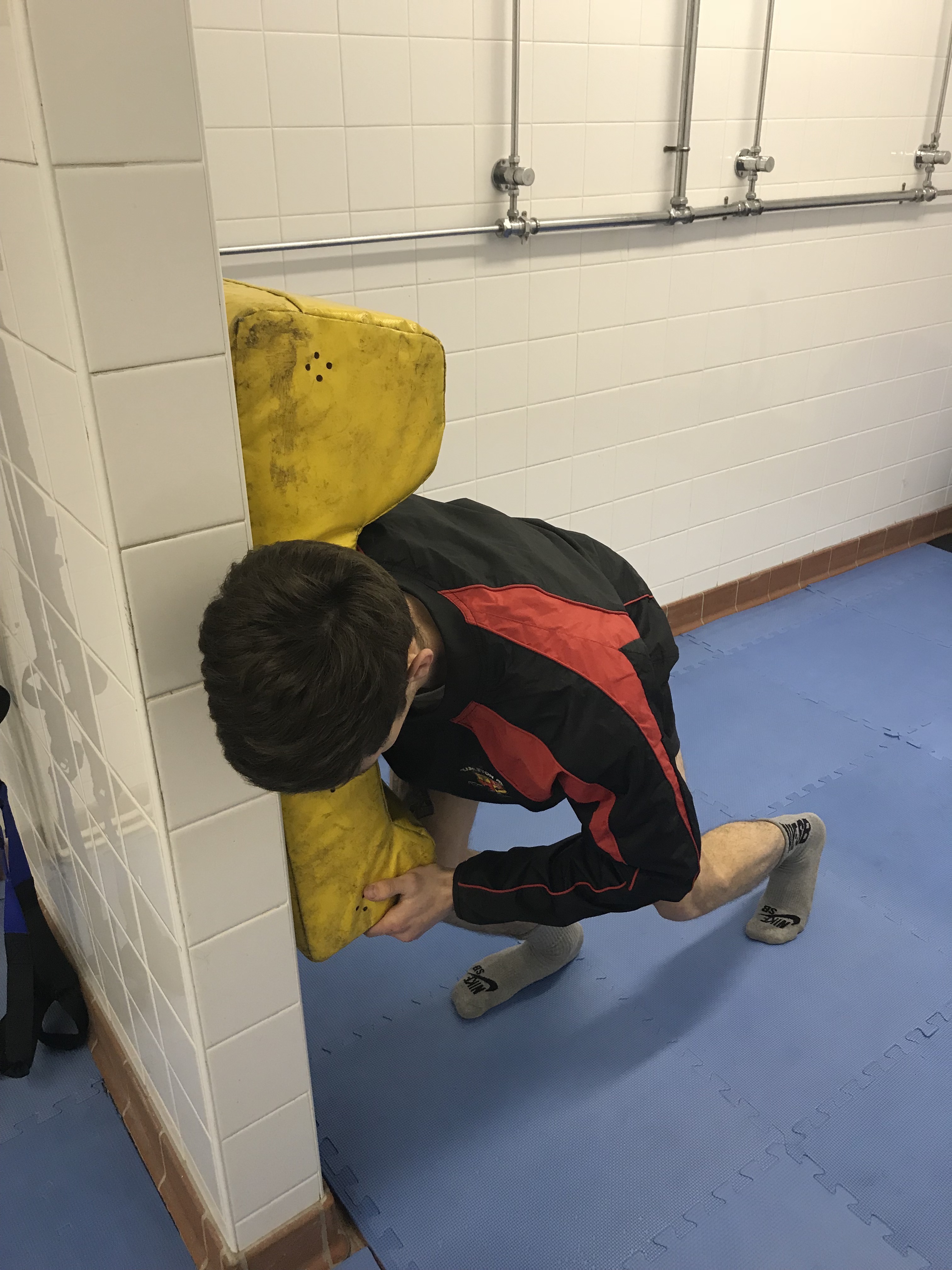
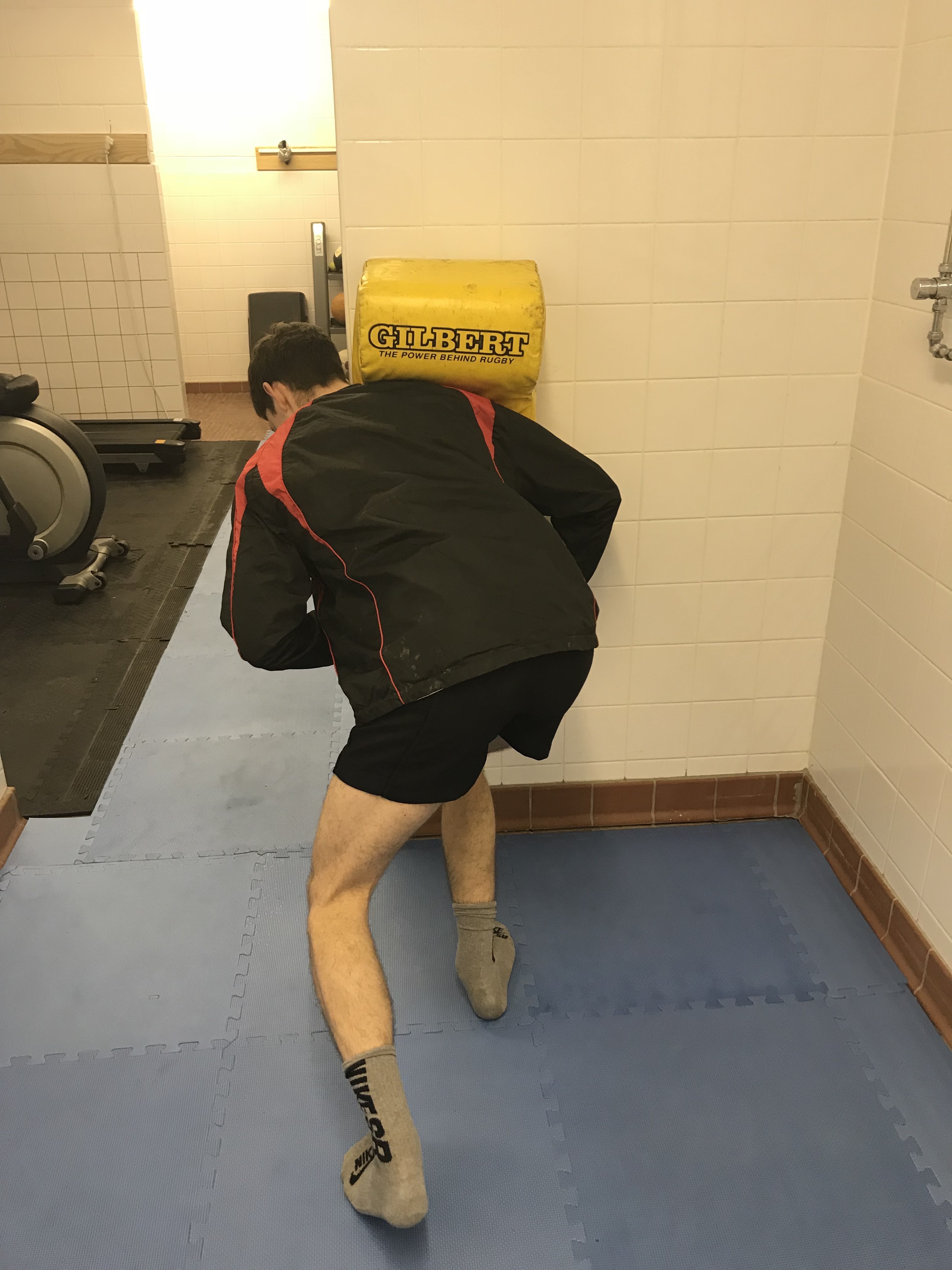
This type of training is best for getting a patient back into their preferred sport or exercise activity. It gets both their body and their mind back into doing specific movements they used to do daily before being injured. These activities all depend on the type of sport the patient plays, working at a rugby cub I have to plan many different types of these activities to get a player back to their match fitness. A favourite one of mine for a forward in rugby union is wall pushes with a tackle bag, this gets the player back into their scrum motion whilst regaining the force required for a game.
If you have suffered or are suffering from an ankle injury and are in need of any treatment, advice or a sufficient rehabilitation program then please contact SPS Premier Sports Therapy today, at SPS Premier Sports Therapy we make it our priority to get our patients back to their activity or sport as fast as possible.
SPS Premier Sports Therapy
spspremiersportstherapy@gmail.com
07482566259